14/08/26 NEW PAGE: Q. How many authorities & the company they keep; collect our data directly from our computers by stealth tactics – to send to Data Centres/ AI. etc❓
Q. When One Drive or any other apps access our computer data – are they sending it wherever they like without our permission as they know regulators [ and other so-called checks and balances ]; including the ICO, refuse to protect the data subject and look the other way & how many times are they all breaking the law❓
This also applies when asking for Subject Access Requests and they put obstacles in your way to prevent you finding out where they share – because authorities place loopholes in policies/legislation for their exclusive use & for the equally unscrupulous individuals, enablers, companies, organisations, who align themselves with the govt – of which, there are many – enabling them ALL to avoid accountability. It happens more times than the public realise.
Prison Guide/Crimes & Prison Sentences
Whats the Prison Sentence for Abuse of Trust
“ What’s the Prison Sentence for Abuse of Trust? The prison sentence for abuse of trust in the UK can vary significantly depending on the circumstances of the offence. Abuse of trust is a serious crime, often involving individuals in positions of authority who exploit their power for personal gain.”
“ Legal Framework and Sentencing Guidelines
The prison sentence for abuse of trust in the UK is determined by several factors, including the severity of the offence, the harm caused, and the offender’s intent. Under UK law, abuse of trust can fall under various offences, such as fraud, sexual offences, or misconduct in public office, each carrying different sentencing guidelines.
Typical Prison Sentences
The prison sentence for abuse of trust can range from a few months to several years, depending on the specific circumstances. For instance:
- Financial Fraud: Offenders can face up to 10 years in prison for severe cases of financial fraud involving abuse of trust.
- Sexual Offences: Sentences for sexual offences involving abuse of trust, such as those committed by teachers or caregivers, can range from several years to life imprisonment.
- Misconduct in Public Office: This offence can result in a sentence of up to life imprisonment, particularly in cases involving significant harm to public trust.”
Ch.2. The only thing necessary for the triumph of evil is for good men to do nothing. – Edmund Burke
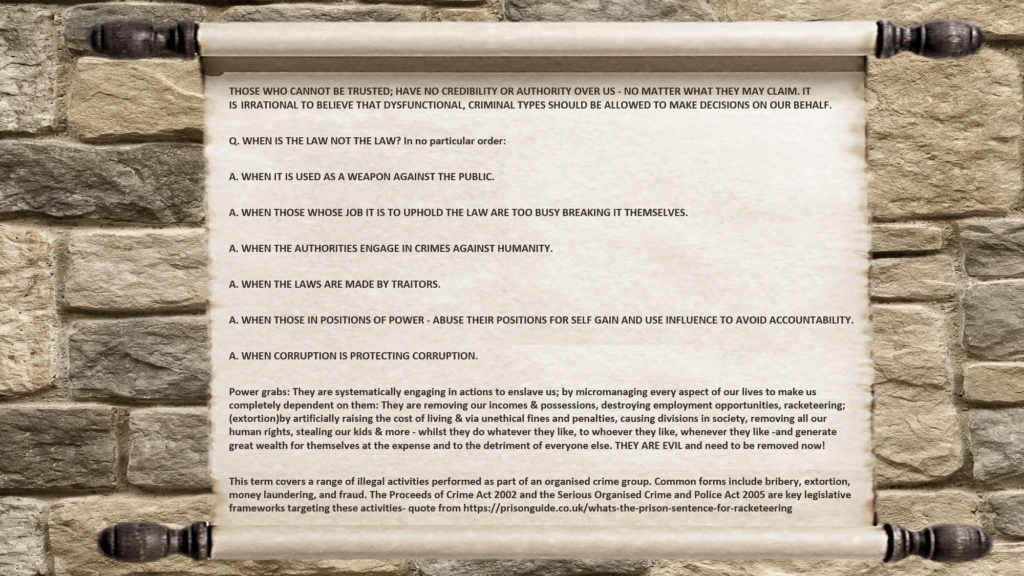
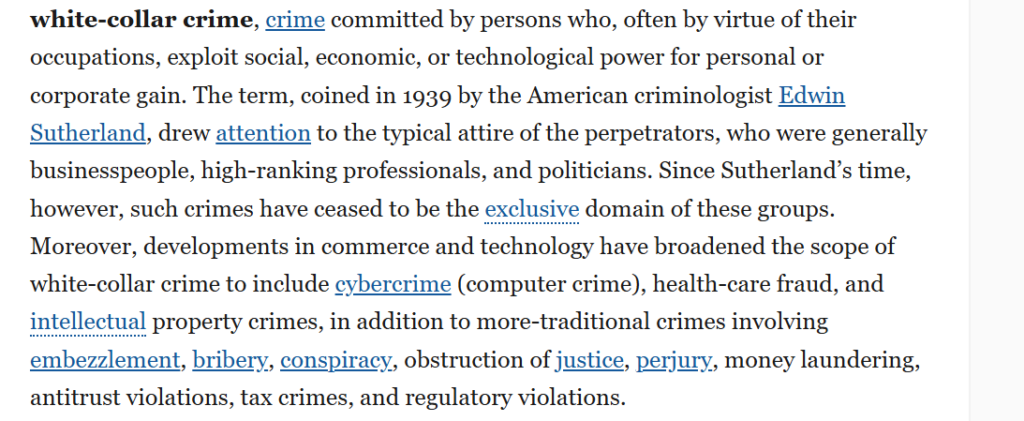
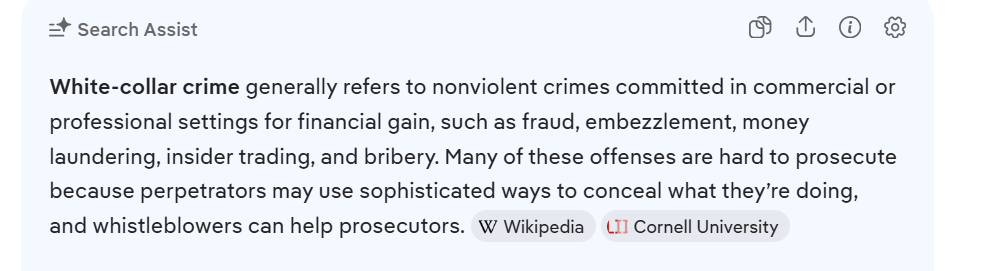
That is why white collar crimes; are the worst crimes because they often lead to inciting violence & other illegal behaviour & so those same decision makers & co including the MSM – can project/deflect & attach blame elsewhere. It also becomes another excuse for them; to create new laws to stop free speech, and prevent the public from sharing information. However, they invalidated their authority when they abused their positions; e.g. to use laws as weapons against the innocent people – many decades ago.
white-collar crime by Britannica:
Computer Misuse Act 1990
Isn’t it ALL very easy for them – when no-one is investigating/preventing it or is held accountable; because the authority criminals obviously planned it this way❗ I also wonder if we all have something being introduced via updates; on our devices🤔🤔😱😱 including tracking apps for when we upload anything. This is plausible; when contracts are given to known; untrustworthy companies e.g. Palantir, Meta etc; who have conducted many human right abuses and have no respect for the consequences of their actions. They only recognise the law when it suits them – to be used to exploit & abuse the public.
DATA PROTECTION ABUSE – None of them can be trusted – which is the main reason they all need to be removed & to stop further corruption protecting corruption.
I know the computer(s) used by myself have been interfered with and my website has been altered after publishing articles on my pages. An example of this happened recently, whilst I went to print the article and when I returned to my computer a minute later, it had been removed from my editing page & the published page – so I had to redo it – using my printed copy.
https://www.bbc.co.uk/bitesize/guides/z8m36yc/revision/5 (predates the actual current legislation beneath this BBC article – because the Act has been amended several times).
In this guide
Pages
- Legislation
- Copyright Designs and Patents Act
- Creative Commons licensing
- Data Protection Act (1998)
- Computer Misuse Act (1990)
- Ethics
- Implications of GPS and tracking
- Impact of digital technology on employment
- Health and safety issues and how to prevent them
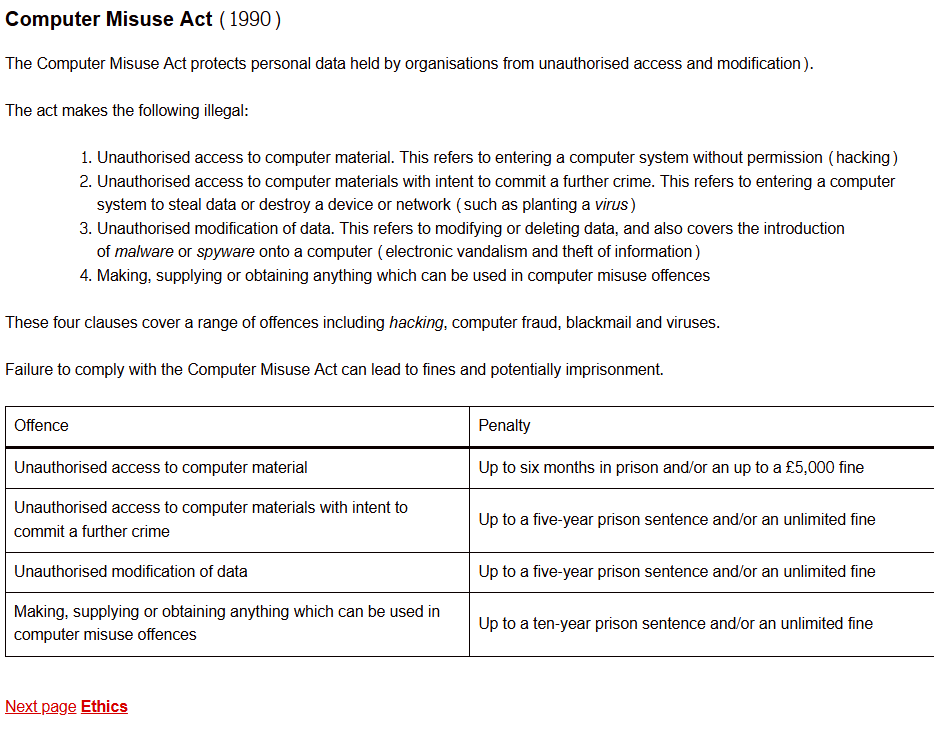
Computer Misuse Act (1990)
The Computer Misuse Act protects personal data held by organisations from unauthorised access and modification).
The act makes the following illegal:
- Unauthorised access to computer material. This refers to entering a computer system without permission (hacking)
- Unauthorised access to computer materials with intent to commit a further crime. This refers to entering a computer system to steal data or destroy a device or network (such as planting a virus)
- Unauthorised modification of data. This refers to modifying or deleting data, and also covers the introduction of malware or spyware onto a computer (electronic vandalism and theft of information)
- Making, supplying or obtaining anything which can be used in computer misuse offences
These four clauses cover a range of offences including hacking, computer fraud, blackmail and viruses.
Failure to comply with the Computer Misuse Act can lead to fines and potentially imprisonment.
| Offence | Penalty |
| Unauthorised access to computer material | Up to six months in prison and/or an up to a £5,000 fine |
| Unauthorised access to computer materials with intent to commit a further crime | Up to a five-year prison sentence and/or an unlimited fine |
| Unauthorised modification of data | Up to a five-year prison sentence and/or an unlimited fine |
| Making, supplying or obtaining anything which can be used in computer misuse offences | Up to a ten-year prison sentence and/or an unlimited fine |
Computer Misuse Act 1990 https://www.legislation.gov.uk/ukpga/1990/18/contents
- Introductory Text
- Computer misuse offences
- Jurisdiction
- Miscellaneous and general
https://www.legislation.gov.uk/ukpga/1990/18/section/1
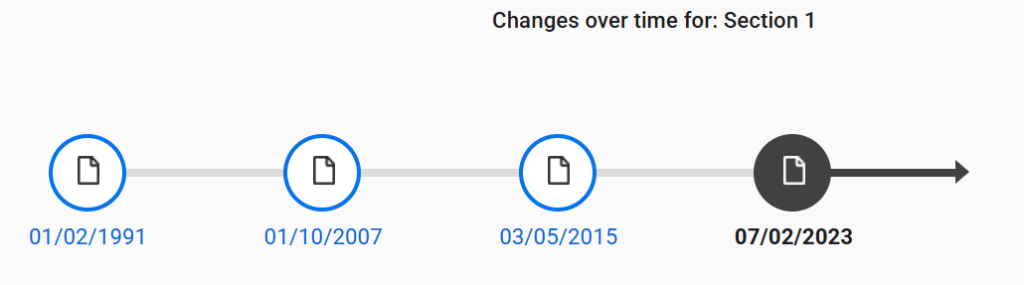
Changes over time for: Section 1
Changes to legislation:
There are currently no known outstanding effects for the Computer Misuse Act 1990, Section 1.
1 Unauthorised access to computer material.
(1)A person is guilty of an offence if—
(a)he causes a computer to perform any function with intent to secure access to any program or data held in any computer [F1, or to enable any such access to be secured];
(b)the access he intends to secure [F2, or to enable to be secured,] is unauthorised; and
(c)he knows at the time when he causes the computer to perform the function that that is the case.
(2)The intent a person has to have to commit an offence under this section need not be directed at—
(a)any particular program or data;
(b)a program or data of any particular kind; or
(c)a program or data held in any particular computer.
[F3(3)A person guilty of an offence under this section shall be liable—
(a)on summary conviction in England and Wales, to imprisonment for a term not exceeding [F4the general limit in a magistrates’ court] or to a fine not exceeding the statutory maximum or to both;
(b)on summary conviction in Scotland, to imprisonment for a term not exceeding [F512] months or to a fine not exceeding the statutory maximum or to both;
(c)on conviction on indictment, to imprisonment for a term not exceeding two years or to a fine or to both.]
Textual Amendments
F1Words in s. 1(1)(a) inserted (S.) (1.10.2007) by Police and Justice Act 2006 (c. 48), ss. 35(2)(a), 53 (with s. 38(1)); S.S.I. 2007/434, art. 2 (the inserting provision being repealed for E.W.N.I. (1.10.2008) by 2007 c. 27, ss. 61(2), 92, 94, Sch. 14 (with Sch. 13 para. 5); S.I. 2008/2504, art. 2(a)(i)(viii))
F2Words in s. 1(1)(b) inserted (S.) (1.10.2007) by Police and Justice Act 2006 (c. 48), ss. 35(2)(b), 53 (with s. 38(1)); S.S.I. 2007/434, art. 2 (the inserting provision being repealed for E.W.N.I. (1.10.2008) by 2007 c. 27, ss. 61(2), 92, 94, Sch. 14 (with Sch. 13 para. 5); S.I. 2008/2504, art. 2(a)(i)(viii))
F3S. 1(3) substituted (1.10.2007 for S. and 1.10.2008 otherwise) by Police and Justice Act 2006 (c. 48), ss. 35(3), 53 (with s. 38(2)(6)); S.S.I. 2007/434, art. 2; S.I. 2008/2503, art. 2(a)
F4Words in s. 1(3)(a) substituted (7.2.2023 at 12.00 p.m.) by The Judicial Review and Courts Act 2022 (Magistrates’ Court Sentencing Powers) Regulations 2023 (S.I. 2023/149), regs. 1(2), 2(1), Sch. Pt. 1 table
F5Word in s. 1(3)(b) substituted (3.5.2015) by Serious Crime Act 2015 (c. 9), s. 88(1), Sch. 4 para. 7(a); S.I. 2015/820, reg. 2(r)(iii)
- Show Geographical Extent(e.g. England, Wales, Scotland and Northern Ireland)
- Show Timeline of Changes
Changes over time for: Section 2
Changes to legislation:
Computer Misuse Act 1990, Section 2 is up to date with all changes known to be in force on or before 14 August 2026. There are changes that may be brought into force at a future date. Changes that have been made appear in the content and are referenced with annotations.
View outstanding changes status warnings
2 Unauthorised access with intent to commit or facilitate commission of further offences.
(1)A person is guilty of an offence under this section if he commits an offence under section 1 above (“the unauthorised access offence”) with intent—
(a)to commit an offence to which this section applies; or
(b)to facilitate the commission of such an offence (whether by himself or by any other person);
and the offence he intends to commit or facilitate is referred to below in this section as the further offence.
(2)This section applies to offences—
(a)for which the sentence is fixed by law; or
(b)for which a person who has attained the age of twenty-one years (eighteen in relation to England and Wales) and has no previous convictions may be sentenced to imprisonment for a term of five years (or, in England and Wales, might be so sentenced but for the restrictions imposed by section 33 of the M1Magistrates’ Courts Act 1980).
(3)It is immaterial for the purposes of this section whether the further offence is to be committed on the same occasion as the unauthorised access offence or on any future occasion.
(4)A person may be guilty of an offence under this section even though the facts are such that the commission of the further offence is impossible.
[F1(5)A person guilty of an offence under this section shall be liable—
(a)on summary conviction in England and Wales, to imprisonment for a term not exceeding [F2the general limit in a magistrates’ court] or to a fine not exceeding the statutory maximum or to both;
(b)on summary conviction in Scotland, to imprisonment for a term not exceeding [F312] months or to a fine not exceeding the statutory maximum or to both;
(c)on conviction on indictment, to imprisonment for a term not exceeding five years or to a fine or to both.]
Textual Amendments
F1S. 2(5) substituted (1.10.2007 for S. and 1.10.2008 otherwise) by Police and Justice Act 2006 (c. 48), ss. 52, 53, Sch. 14 para. 17 (with s. 38(6)); S.S.I. 2007/434, art. 2; S.I. 2008/2503, art. 2(c)
F2Words in s. 2(5)(a) substituted (7.2.2023 at 12.00 p.m.) by The Judicial Review and Courts Act 2022 (Magistrates’ Court Sentencing Powers) Regulations 2023 (S.I. 2023/149), regs. 1(2), 2(1), Sch. Pt. 1 table
F3Word in s. 2(5)(b) substituted (3.5.2015) by Serious Crime Act 2015 (c. 9), s. 88(1), Sch. 4 para. 7(b); S.I. 2015/820, reg. 2(r)(iii)
Marginal Citations
[F13 Unauthorised acts with intent to impair, or with recklessness as to impairing, operation of computer, etc.
(1)A person is guilty of an offence if—
(a)he does any unauthorised act in relation to a computer;
(b)at the time when he does the act he knows that it is unauthorised; and
(c)either subsection (2) or subsection (3) below applies.
(2)This subsection applies if the person intends by doing the act—
(a)to impair the operation of any computer;
(b)to prevent or hinder access to any program or data held in any computer; [F2or]
(c)to impair the operation of any such program or the reliability of any such data; [F3or
(d)to enable any of the things mentioned in paragraphs (a) to (c) above to be done.]]
(3)This subsection applies if the person is reckless as to whether the act will do any of the things mentioned in paragraphs (a) [F4to (d)][F4to (c)] of subsection (2) above.
(4)The intention referred to in subsection (2) above, or the recklessness referred to in subsection (3) above, need not relate to—
(a)any particular computer;
(b)any particular program or data; or
(c)a program or data of any particular kind.
(5)In this section—
(a)a reference to doing an act includes a reference to causing an act to be done;
(b)“act” includes a series of acts;
(c)a reference to impairing, preventing or hindering something includes a reference to doing so temporarily.
(6)A person guilty of an offence under this section shall be liable—
(a)on summary conviction in England and Wales, to imprisonment for a term not exceeding [F5the general limit in a magistrates’ court] or to a fine not exceeding the statutory maximum or to both;
(b)on summary conviction in Scotland, to imprisonment for a term not exceeding [F612] months or to a fine not exceeding the statutory maximum or to both;
(c)on conviction on indictment, to imprisonment for a term not exceeding ten years or to a fine or to both.
Textual Amendments
F1S. 3 substituted (1.10.2007 for S. and 1.10.2008 otherwise) by Police and Justice Act 2006 (c. 48), ss. 36, 53 (with s. 38(3)(4)(6)); S.S.I. 2007/434, art. 2; S.I. 2008/2503, art. 2 (the substituting provision being amended for E.W.N.I. (1.10.2008) by 2007 c. 27, ss. 61(3), 94 (with Sch. 13 para. 5); S.I. 2008/2504, art. 2(a))
F2Word at the end of s. 3(2)(b) inserted (E.W.N.I.) (1.10.2008) by virtue of Serious Crime Act 2007 (c. 27), ss. 61(3)(a)(i), 94 (with Sch. 13 para. 5); S.I. 2008/2504, art. 2(a)
F3S. 3(2)(d) and preceding word repealed (E.W.N.I.) (1.10.2008) by virtue of Serious Crime Act 2007 (c. 27), ss. 61(3)(a)(ii), 92, 94, Sch. 14 (with Sch. 13 para. 5); S.I. 2008/2504, art. 2(a)(i)(viii)
F4S. 3(3): Words “to (c)” substituted for words “to (d)” (E.W.N.I.) (1.10.2008) by virtue of Serious Crime Act 2007 (c. 27), ss. 61(3)(b), 94 (with Sch. 13 para. 5); S.I. 2008/2504, art. 2(a)
F5Words in s. 3(6)(a) substituted (7.2.2023 at 12.00 p.m.) by The Judicial Review and Courts Act 2022 (Magistrates’ Court Sentencing Powers) Regulations 2023 (S.I. 2023/149), regs. 1(2), 2(1), Sch. Pt. 1 table
F6Word in s. 3(6)(b) substituted (3.5.2015) by Serious Crime Act 2015 (c. 9), s. 88(1), Sch. 4 para. 7(c); S.I. 2015/820, reg. 2(r)(iii)
[F13ZA Unauthorised acts causing, or creating risk of, serious damage
(1)A person is guilty of an offence if—
(a)the person does any unauthorised act in relation to a computer;
(b)at the time of doing the act the person knows that it is unauthorised;
(c)the act causes, or creates a significant risk of, serious damage of a material kind; and
(d)the person intends by doing the act to cause serious damage of a material kind or is reckless as to whether such damage is caused.
(2)Damage is of a “material kind” for the purposes of this section if it is—
(a)damage to human welfare in any place;
(b)damage to the environment of any place;
(c)damage to the economy of any country; or
(d)damage to the national security of any country.
(3)For the purposes of subsection (2)(a) an act causes damage to human welfare only if it causes—
(a)loss to human life;
(b)human illness or injury;
(c)disruption of a supply of money, food, water, energy or fuel;
(d)disruption of a system of communication;
(e)disruption of facilities for transport; or
(f)disruption of services relating to health.
(4)It is immaterial for the purposes of subsection (2) whether or not an act causing damage—
(a)does so directly;
(b)is the only or main cause of the damage.
(5)In this section—
(a)a reference to doing an act includes a reference to causing an act to be done;
(b)“act” includes a series of acts;
(c)a reference to a country includes a reference to a territory, and to any place in, or part or region of, a country or territory.
(6)A person guilty of an offence under this section is (unless subsection (7) applies) liable, on conviction on indictment, to imprisonment for a term not exceeding 14 years, or to a fine, or to both.
(7)Where an offence under this section is committed as a result of an act causing or creating a significant risk of—
(a)serious damage to human welfare of the kind mentioned in subsection (3)(a) or (3)(b), or
(b)serious damage to national security,
a person guilty of the offence is liable, on conviction on indictment, to imprisonment for life, or to a fine, or to both.]
Textual Amendments
F1S. 3ZA inserted (3.5.2015) by Serious Crime Act 2015 (c. 9), ss. 41(2), 88(1); S.I. 2015/820, reg. 2(a)
[F13 AMaking, supplying or obtaining articles for use in offence under [F2section 1, 3 or 3ZA]
(1)A person is guilty of an offence if he makes, adapts, supplies or offers to supply any article intending it to be used to commit, or to assist in the commission of, an offence under [F3section 1, 3 or 3ZA].
(2)A person is guilty of an offence if he supplies or offers to supply any article believing that it is likely to be used to commit, or to assist in the commission of, an offence under [F4section 1, 3 or 3ZA].
(3)A person is guilty of an offence if he obtains any [F5article—
(a)intending to use it to commit, or to assist in the commission of, an offence under section 1, 3 or 3ZA, or
(b)with a view to]
its being supplied for use to commit, or to assist in the commission of, an offence under [F6section 1, 3 or 3ZA].
(4)In this section “ article ” includes any program or data held in electronic form.
(5)A person guilty of an offence under this section shall be liable—
(a)on summary conviction in England and Wales, to imprisonment for a term not exceeding [F7the general limit in a magistrates’ court] or to a fine not exceeding the statutory maximum or to both;
(b)on summary conviction in Scotland, to imprisonment for a term not exceeding [F812] months or to a fine not exceeding the statutory maximum or to both;
(c)on conviction on indictment, to imprisonment for a term not exceeding two years or to a fine or to both.]
Textual Amendments
F1S. 3A inserted (1.10.2007 for S. and 1.10.2008 otherwise) by Police and Justice Act 2006 (c. 48), ss. 37, 53 (with s. 38(5)(6)); S.S.I. 2007/434, art. 2; S.I. 2008/2503, art. 2(a)
F2Words in s. 3A heading substituted (3.5.2015) by Serious Crime Act 2015 (c. 9), s. 88(1), Sch. 4 para. 8; S.I. 2015/820, reg. 2(r)(iii)
F3Words in s. 3A(1) substituted (3.5.2015) by Serious Crime Act 2015 (c. 9), ss. 41(3), 88(1); S.I. 2015/820, reg. 2(a)
F4Words in s. 3A(2) substituted (3.5.2015) by Serious Crime Act 2015 (c. 9), ss. 41(3), 88(1); S.I. 2015/820, reg. 2(a)
F5Words in s. 3A(3) substituted (3.5.2015) by Serious Crime Act 2015 (c. 9), ss. 42, 88(1) (with s. 86(5)); S.I. 2015/820, reg. 2(b)
F6Words in s. 3A(3) substituted (3.5.2015) by Serious Crime Act 2015 (c. 9), ss. 41(3), 88(1); S.I. 2015/820, reg. 2(a)
F7Words in s. 3A(5)(a) substituted (7.2.2023 at 12.00 p.m.) by The Judicial Review and Courts Act 2022 (Magistrates’ Court Sentencing Powers) Regulations 2023 (S.I. 2023/149), regs. 1(2), 2(1), Sch. Pt. 1 table
F8Word in s. 3A(5)(b) substituted (3.5.2015) by Serious Crime Act 2015 (c. 9), s. 88(1), Sch. 4 para. 7(d); S.I. 2015/820, reg. 2(r)(iii)
4 Territorial scope of [F1 offences under [F2this Act]].
(1)Except as provided below in this section, it is immaterial for the purposes of any offence under [F3section 1, 3 or 3ZA] above—
(a)whether any act or other event proof of which is required for conviction of the offence occurred in the home country concerned; or
(b)whether the accused was in the home country concerned at the time of any such act or event.
(2)Subject to subsection (3) below, in the case of such an offence at least one significant link with domestic jurisdiction must exist in the circumstances of the case for the offence to be committed.
(3)There is no need for any such link to exist for the commission of an offence under section 1 above to be established in proof of an allegation to that effect in proceedings for an offence under section 2 above.
(4)Subject to section 8 below, where—
(a)any such link does in fact exist in the case of an offence under section 1 above; and
(b)commission of that offence is alleged in proceedings for an offence under section 2 above;
section 2 above shall apply as if anything the accused intended to do or facilitate in any place outside the home country concerned which would be an offence to which section 2 applies if it took place in the home country concerned were the offence in question.
[F4(4A)It is immaterial for the purposes of an offence under section 3A whether the accused was in the home country concerned at the time of any act or other event proof of which is required for conviction of the offence if there is a significant link with domestic jurisdiction in relation to the offence.]
(5)This section is without prejudice to any jurisdiction exercisable by a court in Scotland apart from this section.
(6)References in this Act to the home country concerned are references—
(a)in the application of this Act to England and Wales, to England and Wales;
(b)in the application of this Act to Scotland, to Scotland; and
(c)in the application of this Act to Northern Ireland, to Northern Ireland.
Textual Amendments
F1S. 4 heading: words substituted (1.10.2007 for S. and 1.10.2008 otherwise) by Police and Justice Act 2006 (c. 48), ss. 52, 53, Sch. 14 para. 18; S.S.I. 2007/434, art. 2; S.I. 2008/2503, art. 2
F2Words in s. 4 heading substituted (3.5.2015) by Serious Crime Act 2015 (c. 9), s. 88(1), Sch. 4 para. 9; S.I. 2015/820, reg. 2(r)(iii)
F3Words in s. 4(1) substituted (3.5.2015) by Serious Crime Act 2015 (c. 9), ss. 43(2), 88(1) (with s. 86(10)); S.I. 2015/820, reg. 2(c)
F4S. 4(4A) inserted (3.5.2015) by Serious Crime Act 2015 (c. 9), ss. 43(3), 88(1) (with s. 86(10)); S.I. 2015/820, reg. 2(c)
5 Significant links with domestic jurisdiction.
(1)The following provisions of this section apply for the interpretation of section 4 above.
[F1(1A)In relation to an offence under section 1, 3, 3ZA or 3A, where the accused was in a country outside the United Kingdom at the time of the act constituting the offence there is a significant link with domestic jurisdiction if—
(a)the accused was a United Kingdom national at that time; and
(b)the act constituted an offence under the law of the country in which it occurred.
(1B)In subsection (1A)—
- “country” includes territory;
- “United Kingdom national” means an individual who is—
(a)a British citizen, a British overseas territories citizen, a British National (Overseas) or a British Overseas citizen;
(b)a person who under the British Nationality Act 1981 is a British subject; or
(c)a British protected person within the meaning of that Act.]
(2)In relation to an offence under section 1, either of the following is a significant link with domestic jurisdiction—
(a)that the accused was in the home country concerned at the time when he did the act which caused the computer to perform the function; or
[F2(b)that any computer containing any program or data to which the accused secured or intended to secure unauthorised access by doing that act was in the home country concerned at that time.]
[F2(b)that any computer containing any program or data to which the accused by doing that act secured or intended to secure unauthorised access, or enabled or intended to enable unauthorised access to be secured, was in the home country concerned at that time.]
(3)In relation to an offence under section 3, either of the following is a significant link with domestic jurisdiction—
(a)that the accused was in the home country concerned at the time when [F3he did the unauthorised act (or caused it to be done)] ; or
[F4(b)that the unauthorised act was done in relation to a computer in the home country concerned.]
[F5(3A)In relation to an offence under section 3ZA, any of the following is also a significant link with domestic jurisdiction—
(a)that the accused was in the home country concerned at the time when he did the unauthorised act (or caused it to be done);
(b)that the unauthorised act was done in relation to a computer in the home country concerned;
(c)that the unauthorised act caused, or created a significant risk of, serious damage of a material kind (within the meaning of that section) in the home country concerned.]
Textual Amendments
F1S. 5(1A)(1B) inserted (3.5.2015) by Serious Crime Act 2015 (c. 9), ss. 43(4), 88(1) (with s. 86(10)); S.I. 2015/820, reg. 2(c)
F2S. 5(2)(b) (as second appearing) substituted (S.) (1.10.2007) by Police and Justice Act 2006 (c. 48), ss. 52, 53, Sch. 14 para. 19(2) (with s. 38(1)); S.S.I. 2007/434, art. 2 (the substituting provision being repealed for E.W.N.I. (1.10.2008) by 2007 c. 27, ss. 61(5), 92, 94, Sch. 14 (with Sch. 13 para. 5); S.I. 2008/2504, art. 2(a))
F3Words in s. 5(3)(a) substituted (1.10.2007 for S. and 1.10.2008 otherwise) by Police and Justice Act 2006 (c. 48), ss. 52, 53, Sch. 14 para. 19(3)(a) (with s. 38(4)); S.S.I. 2007/434, art. 2; S.I. 2008/2503, art. 2
F4S. 5(3)(b) substituted (1.10.2007 for S. and 1.10.2008 otherwise) by Police and Justice Act 2006 (c. 48), ss. 52, 53, Sch. 14 para. 19(3)(b) (with s. 38(4)); S.S.I. 2007/434, art. 2; S.I. 2008/2503, art. 2
F5S. 5(3A) inserted (3.5.2015) by Serious Crime Act 2015 (c. 9), ss. 43(5), 88(1) (with s. 86(10)); S.I. 2015/820, reg. 2(c)
6 Territorial scope of inchoate offences related to [F1 offences under [F2this Act]].
(1)On a charge of conspiracy to commit an [F3offence under [F4this Act]] the following questions are immaterial to the accused’s guilt—
(a)the question where any person became a party to the conspiracy; and
(b)the question whether any act, omission or other event occurred in the home country concerned.
(2)On a charge of attempting to commit an offence under [F5this Act] the following questions are immaterial to the accused’s guilt—
(a)the question where the attempt was made; and
(b)the question whether it had an effect in the home country concerned.
(3)F6. . . . . . . . . . . . . . . . . . . . . . . . . . . . . . . .
(4)This section does not extend to Scotland.
Textual Amendments
F1S. 6 heading: words substituted (1.10.2008) by Police and Justice Act 2006 (c. 48), ss. 52, 53, Sch. 14 para. 20(a); S.I. 2008/2503, art. 2
F2Words in s. 6 heading substituted (3.5.2015) by Serious Crime Act 2015 (c. 9), s. 88(1), Sch. 4 para. 10(2) (with s. 86(6)); S.I. 2015/820, reg. 2(r)(iii)
F3Words in s. 6(1) substituted (1.10.2008) by Police and Justice Act 2006 (c. 48), ss. 52, 53, Sch. 14 para. 20(b); S.I. 2008/2503, art. 2
F4Words in s. 6(1) substituted (3.5.2015) by Serious Crime Act 2015 (c. 9), s. 88(1), Sch. 4 para. 10(3) (with s. 86(6)); S.I. 2015/820, reg. 2(r)(iii)
F5Words in s. 6(2) substituted (3.5.2015) by Serious Crime Act 2015 (c. 9), s. 88(1), Sch. 4 para. 10(4) (with s. 86(6)); S.I. 2015/820, reg. 2(r)(iii)
F6S. 6(3) repealed (1.10.2008) by Serious Crime Act 2007 (c. 27), ss. 63(1)(2), 92, 94, Sch. 6 para. 59(2), Sch. 14 (with Sch. 13 para. 5); S.I. 2008/2504, art. 2